Sea shanties and maritime music

A chanty is a seaman's work song, and the Chanty Man is its leader – the acknowledged foresinger, forehand of the working crew. Black and blue from the thuggery of Shanghai Brown's boarding-house – or Patch Eye Curtin's, or Katie Wilson's; split-lipped, broken-nosed, ear-slit, scalp-torn; cheated and shown by cozen and crimp; sick of soul and body; his chief earthly possessions a port, pannikin, and spoon, and a pair of leaky sea-boots...

And still he could sing! Blessed was the ship that could boast one good man of his tribe. Thrice blessed she that could boast one in each watch.

William Brown Meloney IV, Everybody's Magazine, 1915

This Day in History (February 29, 1908)

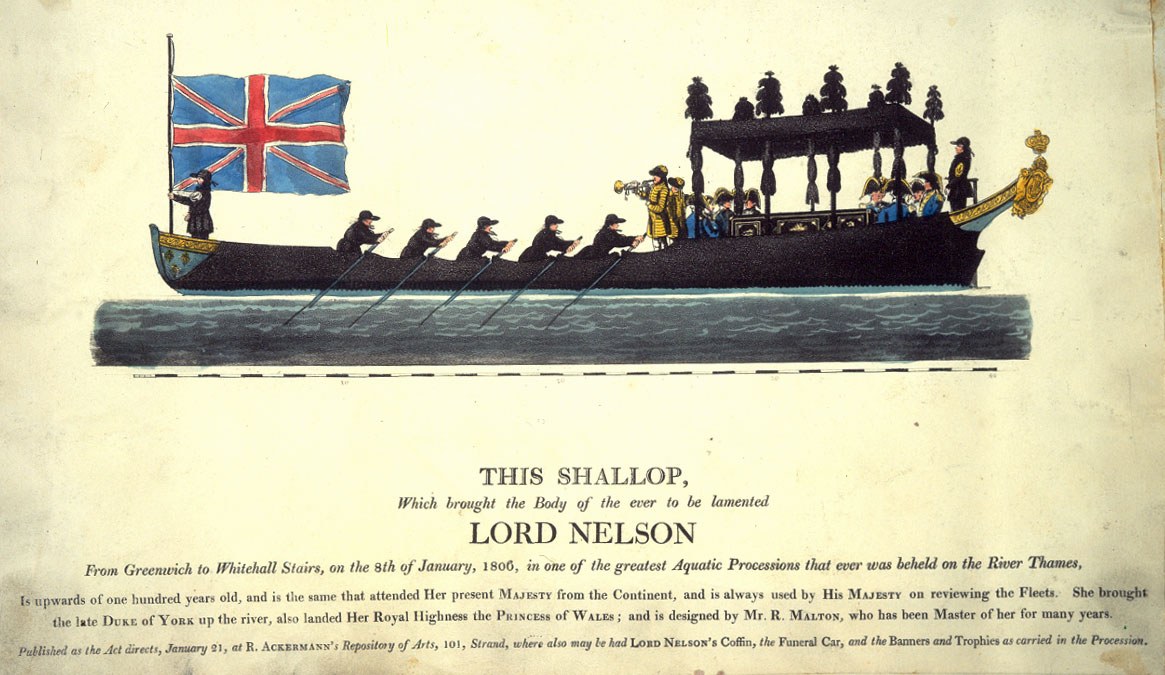
This Day in History (January 8, 1806)

The death of Lord Nelson was a national tragedy like no other for England. "From Greenwich to Whitehall Stairs, on the 8th of January, 1806, in one of the greatest Aquatic Processions that ever was beheld on the River Thames" drifted the royal shallop (barge). The event is referenced in the modern lament, Carrying Nelson Home. Nelson is mentioned in nearly a dozen other songs.

Try a random shanty sampling

When Johnson's Ale Was New
Forecastle song

There were three jovial fellows
Came over the hill together.
Came over the hill together
To make up a jovial crew.

And they ordered their pints of beer
And bottles of sherry
To help them over the hills so merry,
When Jones's Ale was new, me boys,
When Jones's Ale was new.

And the first of them was a tinker,
And he wasn't no small ale drinker.
He was a jolly beer drinker
Among this jovial crew.
And he called for a pint of the very best ale
To drink a whole gallon he never would fail.
To drink a whole gallon he never would fail,

When Jones' Ale was new, me boys
When Jones' Ale was new.

And they ordered their pints of beer
And bottles of sherry,
To help them over the hills so merry,
When Jones' Ale was new, me boys
When Jones' Ale was new.
(Alternate Chorus:)
When the landlord's daughter, she came in,
And we kissed those rosy cheeks again.
We all sat down and then we'd sing.
When Jones's ale was new, me boys,
When Jones's ale was new.


And the next to come in was a soldier
With his flintlock upon his shoulder,
For none could be more bolder,
And his long broadsword he drew.
He swore every man should spend a pound,
And they should treat all hands around.
Then he jolly well drank their healths all 'round
And the next to come in was a dyer
Who sat himself down by the fire,
'Cause that was his desire
To make up a jovial crew.
And the landlady told him straight to his face
The chimney corner was his own place,
And there he could sit and dye his own face,

And the next to come in was a mason.
His hammer needed refacin'.
His hammer needed refacin'
To make up a jovial crew.
So he threw his old hammer against the wall,
And he hoped that the church and the chapel would fall,
For that'd make work for masons all
And the last to come in was a hatter,
And there was no man ever fatter.
No man could ever be fatter
And make up a jovial crew.
When the landlady's daughter, she came in
He kissed her twixt the nose and chin,
And the pints of beer they came rolling in

Will Watch
Forecastle song

One morn when the wind from the northward blew keenly,
While sullenly roared the big waves of the main,
A famed smuggler, Will Watch, kissed his Sue, then
serenely took helm, and to sea boldly steered out again.
Will had promised his Sue that this trap, if well ended,
Should coil up his ropes, and he'd anchor on shore;
When his pockets were lined, why his life should be mended
The laws he had broken he'd never break more.

His sea-boat was trim—made her port—took her lading,
Then Will stood to sea, reached the offing, and cried,
"This night, if I've luck, furls the sails of my trading.
In dock I can lay—serve a friend too beside."
He lay to till night came on darksome and dreary,
To crowd every sail then he piped up all hands;
But a signal soon spied—'twas a prospect uncheerly,
A signal that warned him to bear from the land.

"The Philistines are out," cries Will, "we'll take no heed on't,
Attacked, who's the man that will flinch from his gun?
Should my head be blown off I shall ne'er feel the need on't,
We'll fight while we can ; when we can't, boys, we'll run."
Thro' the haze of the night a bright flash now appearing,
"Oh ho!" cries Will Watch, "the Philistines bear down.
Bear a hand, my tight lads, ere we think about sheering,
Our broadside pour in should we swim, boys, or drown."

'But should I be popped off, you, my mates left behind me,
Regard my last words, see 'em kindly obeyed.
Let no stone mark the spot, and, my friends, do you mind me.
Near the beach is the grave where Will Watch should be laid."
Poor Will's yarn was spun out—for a bullet next minute
Laid him low on the deck and he never spoke more;
His bold crew fought the brig while a shot remained in it,
Then sheered, and Will's hulk to his Susan they bore.

In the dead of the night his last wish was complied with,
To few known his grave and to few known his end;
He was borne to the earth by the crew that he died with;
He'd the tears of his Susan, the prayers of each friend.
Near his grave dash the billows, the winds loudly bellow,
Yon ash struck with lightning points out the cold bed
Where Will Watch, the bold smuggler, that famed lawless fellow,
Once feared — now forgot — sleeps in peace with the dead.